Lockdown: a band-aid solution for rhino poaching
- Laura du Toit
- May 28, 2021
- 4 min read
Updated: Mar 13, 2022
While South Africa ground to a halt following the national coronavirus lockdown, the war on rhino poaching barely broke step.
Wildlife crime is ranked amongst the top four illegal activities, alongside arms dealers, human trafficking and the drugs trade. Crime syndicates operate across international boundaries, decimating threatened species. Rhino poaching has steadily mounted, fuelled by the false belief that their horns have medicinal properties. Within the last five years, more than 4500 rhinos have been slaughtered in South Africa. Rhino poaching has seen a staggering increase since 2011 and the tipping point, when more rhinos are being poached than born, is close at hand.
On World Rhino Day in 2011, Project Rhino was launched by 18 founder members committed to preserving South Africa’s rhinos. Now a collaborative of 37 like-minded organisations, Project Rhino fights to eliminate rhino poaching, combat wildlife crime and protect South Africa’s wildlife. While their focus is on the iconic black and southern white rhinos, Project Rhino recognises the broader threats faced by all wildlife, including habitat loss and human pressures. The rhino poaching crisis is symptomatic of the broader environmental threats which face South Africa and its neighbours.
Francois du Toit, CEO of African Conservation Trust (ACT), believes that tackling wildlife crime requires a holistic approach that responds to the complex range of factors that drive it. ACT is at the heart of Project Rhino, as one of its founding organisations. Championing environmental causes for nearly 20 years, ACT has provided the secretariat, project oversight and fundraising for the Project Rhino collaborative since its inception. “Over the past 9 years, ACT Rhino Fund has contributed over R30 million to Project Rhino reserves for combatting wildlife crime. Next year, we celebrate 10 years of collaboration,” says du Toit.
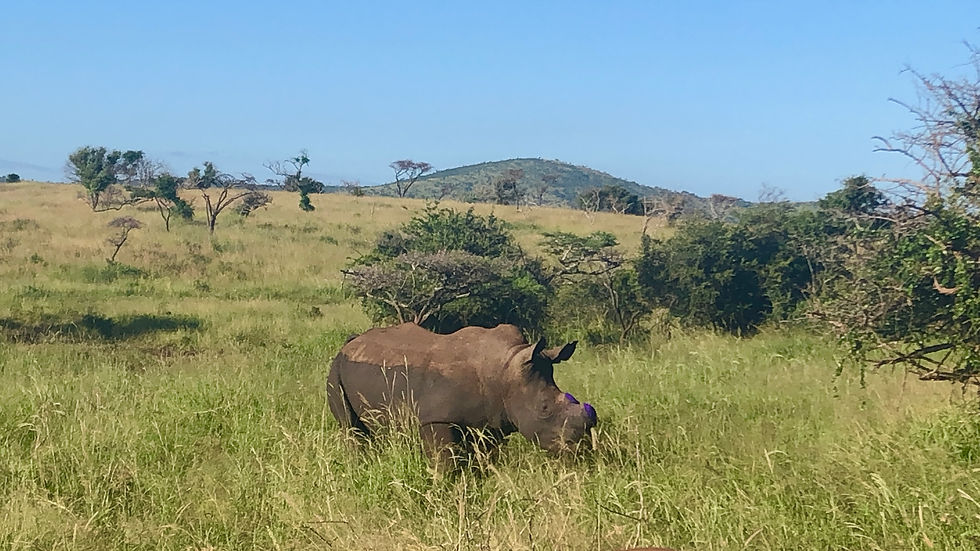
At the beginning of the national lockdown, Project Rhino had to make some tough decisions to protect KwaZulu Natal’s (KZN) rhino population. “Reserves are increasingly under pressure as many rangers have taken salary cuts or been laid off. It is vital that our K9 and horse units, as well as aerial patrols are kept active,” du Toit says. Project Rhino provides ranger and reserve support in the form of aerial surveillance, a canine (K9) unit and horse patrols, as well as training and equipment. Thanks to an aggressive dehorning programme across the province, there have been no rhino poaching incidents in practiced reserves for over 18 months.
Level 5 of South Africa’s coronavirus lockdown had a noticeable effect on its wildlife. Travel restrictions completely shut down tourism in reserves and stifled rhino poachers’ activity. Karen Odendaal, Reserve Manager at Manyoni Game Reserve, warily observed the dip in rhino poaching due to increased policing and roadblocks. “The only problem is that after lockdown, when the nation is more mobile, we’re anticipating an increase in rhino poaching,” Odendaal says. She fears that rhino poaching will spike once transport channels are reopened. Simon Naylor, Reserve Manager at Phinda Private Game Reserve, echoes these sentiments.
The global pandemic has highlighted the threats of the wildlife trade, but conservationists have voiced concern that poaching will continue despite this. The initial outbreak of COVID-19 was traced back to a wildlife market in China, which prompted the Chinese government to quickly ban the consumption of wild animal products. While a few prominent wildlife markets were closed as a result, whether or not it will lessen rhino poaching is yet to be seen. “A lot of attention has been pointed at those wet markets, but not enough on poaching, which is the actual source of the problem,” says Chris Galliers, president of the International Rangers Federation (IRF). Galliers mentions that the economic impact of lockdown has led to job loss for some of the most vulnerable communities, many of which are extremely reliant on eco-tourism. “Level 5 of lockdown was quiet, but as the economic crunch took hold on the communities around protected areas, we started seeing an increase in bushmeat poaching,” says Galliers. He mentions that poaching with dogs has been rampant. Although rhino poaching dropped off dramatically during level 5, incidents of bushmeat poaching rose. South Africa’s deepening economic crisis is forcing the hand of rural communities.
In an effort to mitigate these risks, Feeding the Wildlife Community was born. The campaign was spearheaded by Project Rhino’s Grant Fowlds, Joe Pieterson from Nkhombe Rhino, as well as Chris Small and Steve Mulholland from Mziki Reserve. The initiative aims to relieve food insecurity by providing families, rangers and wildlife communities with nutritional porridge and food parcels. It soon grew to include conservation partners like ACT, the Kingsley Holgate Foundation and others, such as DoMore Foundation. At the end of July 2020, more than 500 000 meals had been delivered to local communities that reside on the borders of nature and game reserves.
The initiative has built valuable bridges between local communities and conservation, which is vital in preserving rhino populations. Fowlds says that at each food drop, the team would stress that they were distributing food with neighbouring game reserves. “We wanted to emphasise that communities should not poach in nearby parks, as these wildlife sanctuaries are not only employing rangers but providing for them in this time of need,” Fowlds says.
As a long-term approach to resolving wildlife crime, ACT and Project Rhino seek to develop a broad-based Wildlife Economy. This is achieved through community engagement for rangeland expansion and its Wildlife Youth and Leadership Programme. This vision extends from the hugely successful Rhino ART campaign and Feeding the Wildlife Communities to flagship events like the 2019 World Youth Wildlife Summit (WYWS). The Summit brought together 225 delegates from Africa, Asia and the Global North, equipping the youth to become Ambassadors for Conservation and influencers to reduce wildlife crime.
The early stages of lockdown may have stemmed the tide, but Level 5 was a band-aid solution for an ongoing battle against rhino poaching. As travel restrictions are lifted, rhino poaching intensifies once again. The danger looms in South Africa’s economic crisis, as survival mechanisms may drive communities into poaching. In 2018, South Africa lost 769 rhinos to poachers; the first time in over five years that the annual figure was under 1000. This seems a hollow victory, but organisations like Project Rhino are paving the way towards a Wildlife Economy in which community focussed initiatives build a future for South Africa’s rhinos.
I wrote this piece for THOLA magazine; it will be published later in the year.


Comments